

Introduction: A Living System, Not a Product
In a world increasingly shaped by industrial agriculture, synthetic inputs, and fragmented approaches to health, a quieter but deeply influential movement has been growing for more than a century. Biodynamic gardening, the Demeter certification, anthroposophy, and the iconic natural health brand Weleda are all expressions of a single, coherent worldview—one that sees soil, plants, animals, humans, and the cosmos as part of an interconnected living system.
To many, these names may seem loosely related or even mysterious. Biodynamic gardening is often described as “organic plus,” Demeter is recognized as a rigorous certification label, anthroposophy sounds philosophical or spiritual, and Weleda is known globally for natural skincare and remedies. Yet they are not separate ideas stitched together after the fact. They all originate from the same source and intention: to heal the relationship between humans and nature.
This article explores how biodynamic gardening, Demeter, anthroposophy, and Weleda are intrinsically linked—historically, philosophically, and practically—and why their relevance is arguably greater today than ever before.
Anthroposophy: The Philosophical Root
At the heart of biodynamic gardening, Demeter, and Weleda lies anthroposophy, a holistic philosophy developed by Austrian thinker and social reformer Rudolf Steiner in the early 20th century. Anthroposophy literally means “wisdom of the human being,” and its central aim is to reunite scientific thinking with spiritual insight.
Steiner did not reject modern science. Instead, he argued that material science alone was insufficient to understand life. Plants, soils, animals, and humans are not mechanical systems, he suggested, but living beings shaped by invisible forces—rhythms, relationships, and formative energies that can be observed through careful, ethical perception.
Anthroposophy expresses itself in many practical fields:
- Education (Waldorf/Steiner schools)
- Medicine and pharmacy
- Architecture and art
- Social organization
- Agriculture and gardening
In each case, the goal is the same: to support life processes rather than dominate them.
In agriculture, this philosophy became biodynamic farming, the first organized ecological agriculture system in the world.
Biodynamic Gardening: Agriculture as a Living Organism
Origins of Biodynamics
Biodynamic gardening began in 1924, when Rudolf Steiner delivered a series of lectures to farmers who were alarmed by declining soil fertility, weaker crops, and loss of seed vitality following the introduction of chemical fertilizers. These lectures—now known as the Agriculture Course—laid the foundation for biodynamic agriculture.
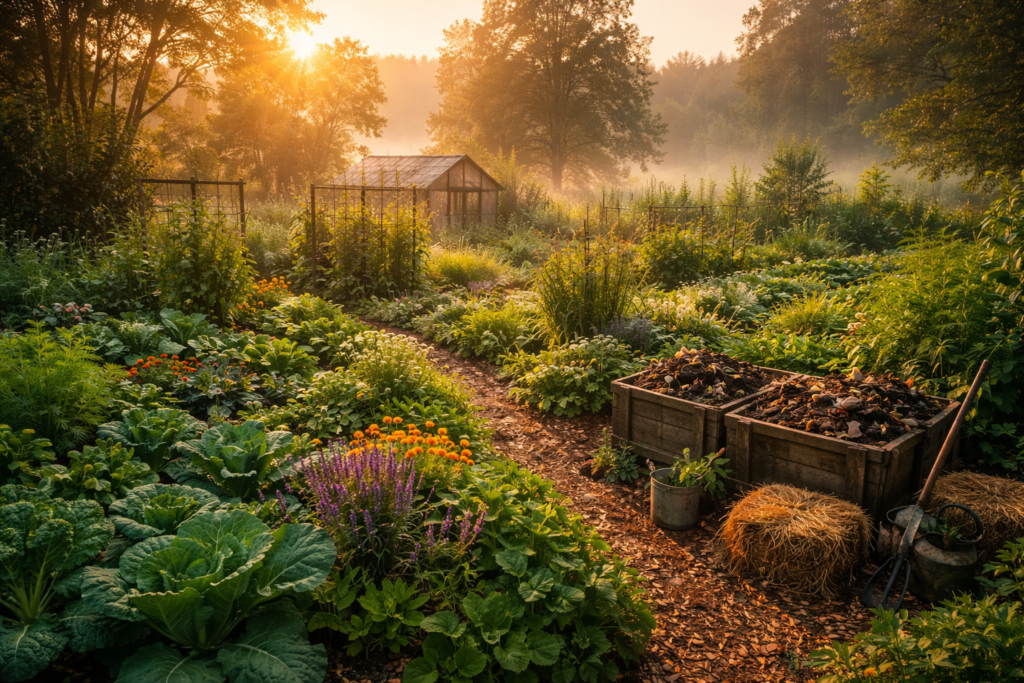
Steiner proposed a radical idea for the time: a farm or garden should be understood as a self-contained living organism. Soil, plants, animals, insects, microorganisms, and humans all form a single metabolic system. When balance is restored within this system, fertility and resilience naturally follow.
Core Principles of Biodynamic Gardening
Biodynamic gardening goes beyond organic practices by integrating ecological, energetic, and cosmic considerations. Its key principles include:
- Living soil: Soil is not an inert medium but a living entity that must be nourished with compost, cover crops, and microbial life.
- Closed-loop fertility: Composting plant and animal materials from the garden itself to create self-sustaining fertility.
- Biodiversity: Polycultures, companion planting, hedgerows, and wildlife habitats are essential.
- Biodynamic preparations: Special herbal and mineral preparations are used in compost and fields to stimulate soil and plant vitality.
- Cosmic rhythms: Planting, cultivating, and harvesting are aligned with lunar and planetary cycles.
Rather than forcing growth, biodynamic gardeners aim to enhance the formative forces of life already present in nature.
The Biodynamic Preparations: Nature as Medicine for the Soil
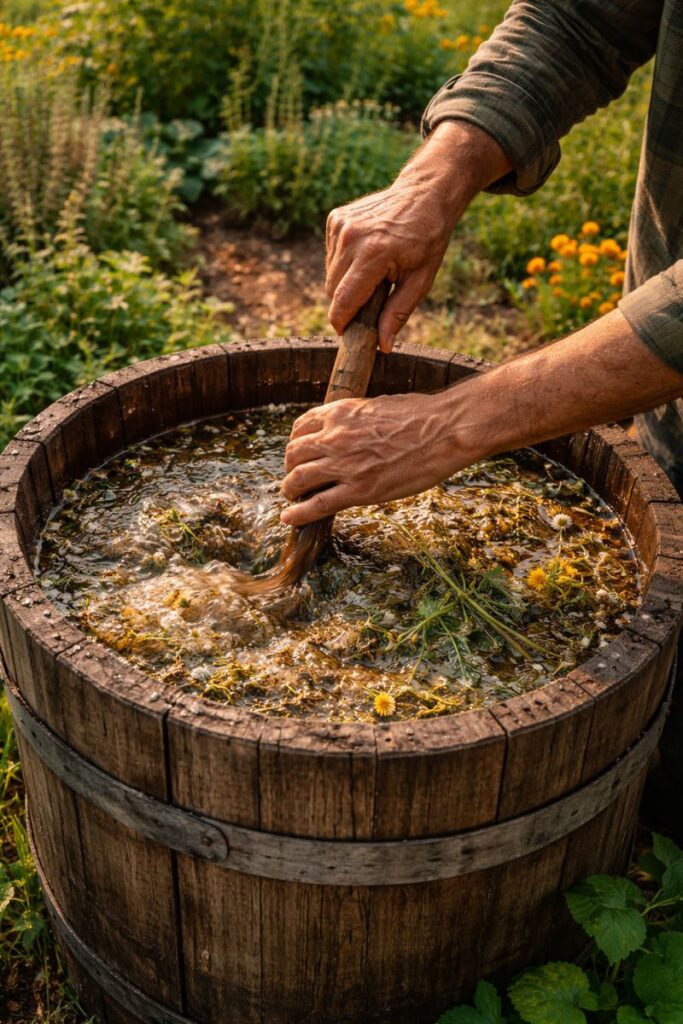
One of the most distinctive aspects of biodynamic gardening is the use of nine biodynamic preparations, numbered 500–508. These preparations use medicinal plants such as yarrow, chamomile, nettle, oak bark, dandelion, and valerian, combined with animal substances and carefully timed processes.
While often misunderstood or dismissed as mystical, these preparations are used in extremely small quantities—more like homeopathic stimulants for soil life than fertilizers. Their purpose is not to add nutrients, but to activate microbial processes, enhance root–soil relationships, and improve compost maturity.
Modern research has increasingly shown that biodynamic soils tend to have:
- Higher microbial diversity
- Greater humus stability
- Improved water retention
- Enhanced plant resilience
This aligns closely with Weleda’s own approach to medicinal plant cultivation.
Demeter: The Gold Standard of Biodynamic Certification
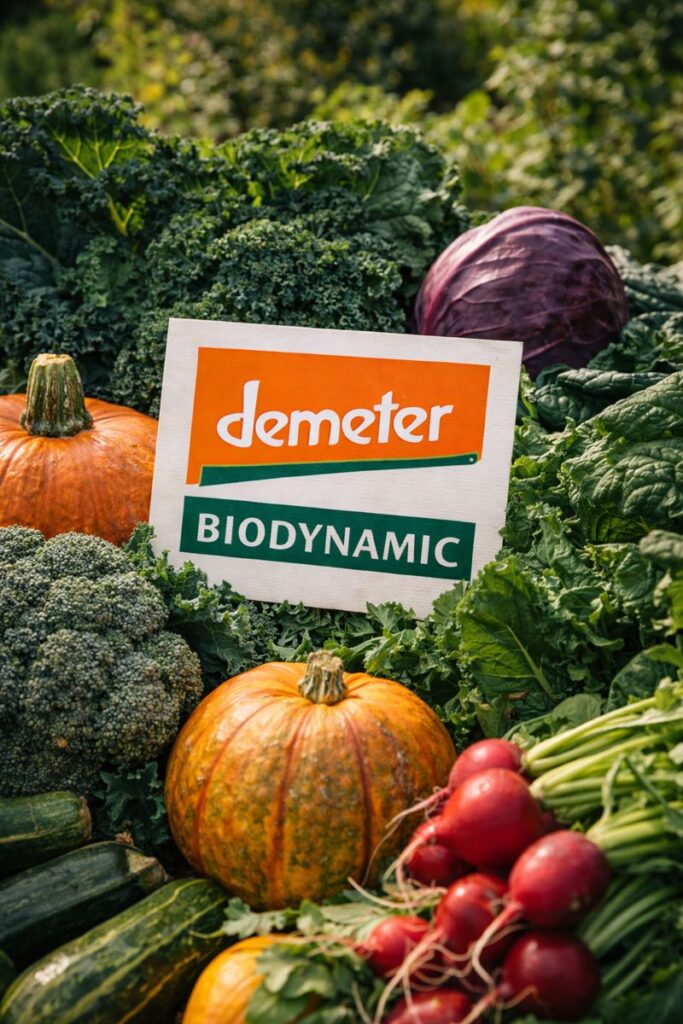
As biodynamic farming spread internationally, the need arose to protect its integrity. This led to the creation of Demeter, the world’s oldest ecological certification label, founded in 1928.
Named after the Greek goddess of agriculture and fertility, Demeter represents far more than an organic standard.
What Makes Demeter Different?
Demeter certification requires:
- Full compliance with organic standards
- Mandatory use of biodynamic preparations
- Whole-farm biodiversity (not monocropping)
- Ethical animal husbandry
- On-farm fertility generation
- Prohibition of GMOs and synthetic inputs
Unlike many certifications that focus on inputs, Demeter evaluates the farm as a living whole.
Products carrying the Demeter label—whether food, wine, textiles, or cosmetics—must meet rigorous standards from soil to shelf.
For conscious consumers, Demeter is a sign of deep ecological commitment rather than surface-level sustainability.
Weleda: Anthroposophy in Action
Founded in 1921, Weleda is one of the most direct and enduring expressions of anthroposophy in practice. The company was co-founded by Rudolf Steiner, physician Ita Wegman, and chemist Oskar Schmiedel with a clear mission: to create medicines and body care products that support the body’s own healing intelligence.
From the beginning, Weleda rejected synthetic chemicals in favor of whole-plant extracts, mineral substances, and rhythmic production processes. This approach mirrored biodynamic principles long before “natural” became a marketing term.
Biodynamic Cultivation at Weleda
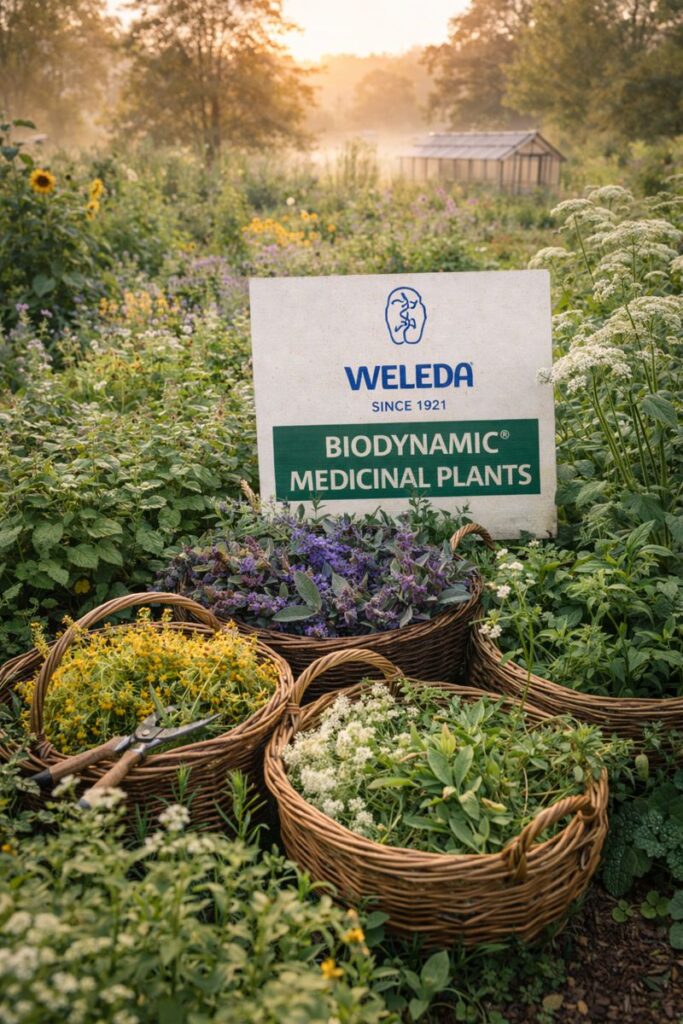
Weleda grows many of its medicinal plants in its own biodynamic gardens around the world, including in Germany, Switzerland, France, and beyond. These gardens are managed according to Demeter standards and biodynamic principles.
Key aspects include:
- Seed saving and open-pollinated varieties
- Compost made with biodynamic preparations
- Manual harvesting at optimal plant stages
- Attention to lunar and seasonal rhythms
This ensures that plant extracts used in Weleda products carry not just chemical constituents, but vitality and integrity.
From Garden to Body: A Shared Philosophy
What unites biodynamic gardening, Demeter, anthroposophy, and Weleda is a consistent worldview:
- Health begins in the soil
- Vitality cannot be synthesized
- Nature works through relationships, not isolation
- Human wellbeing is inseparable from planetary wellbeing
Biodynamic gardens cultivate plants with stronger root systems, richer aromas, and greater resilience. Demeter ensures these principles are protected at scale. Anthroposophy provides the philosophical foundation. Weleda brings the results into daily human care—through skincare, remedies, and wellness products.
In this sense, applying a Weleda product is not just personal care; it is participation in a regenerative system that begins beneath our feet.
Why This Matters Today
As climate change, soil degradation, and chronic health issues accelerate, the biodynamic–anthroposophical approach offers a compelling alternative. It asks us to slow down, observe, and work with life rather than against it.
For gardeners, it offers a way to restore soil and grow nutrient-dense food. For farmers, it provides resilience and independence. For consumers, Demeter and Weleda offer transparency and trust in an often confusing marketplace.
Most importantly, this integrated system reminds us that sustainability is not just technical—it is cultural, ethical, and spiritual.
Conclusion: One Living Thread
Biodynamic gardening, Demeter certification, anthroposophy, and Weleda are not four separate ideas. They are four expressions of one living thread—a holistic vision that recognizes the Earth as a living being and humanity as its conscious steward.
In choosing biodynamic food, Demeter-certified products, or Weleda body care, we are not just making healthier choices for ourselves. We are supporting a regenerative future rooted in respect, balance, and life itself.
About The Author
