

How to Build a Simple Natural Skincare Routine with Weleda.
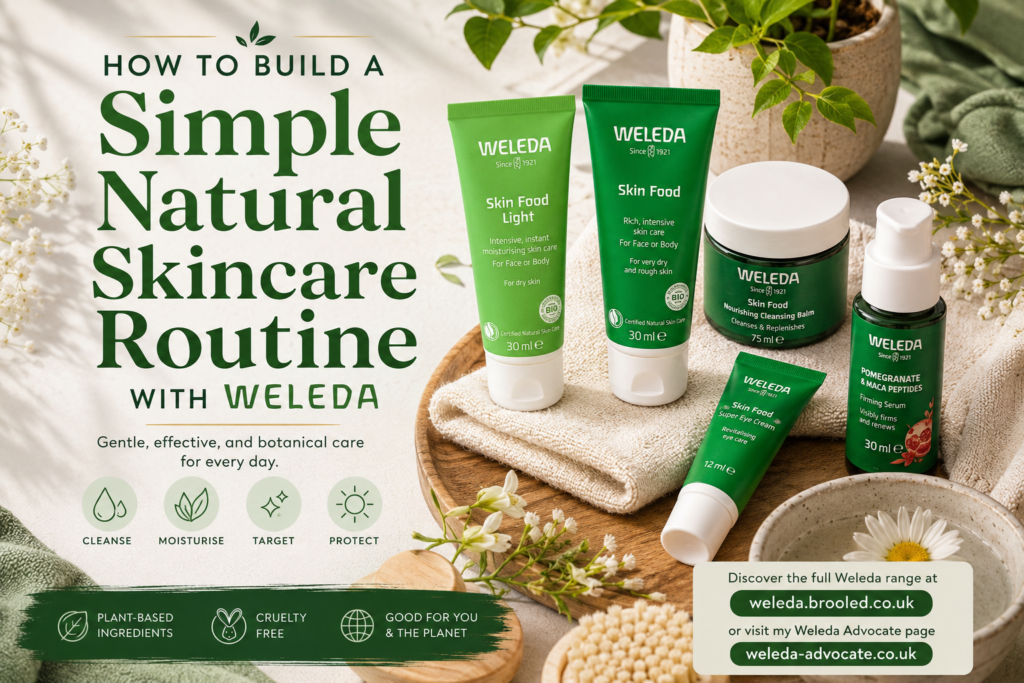
A calm, practical guide to cleansing, moisturising, targeting dry areas and choosing Weleda products that fit your real skin, your daily rhythm and your lifestyle.
Weleda Skin Food Original vs Light: Which One Is Right for Your Skin?

BROOLED WELEDA JOURNAL Weleda Skin Food Original vs Light: Which One Is Right for Your Skin? The classic green tube or the lighter everyday version? Here is a practical, skin-friendly guide to texture, finish, dryness, routine and how to choose the right Skin Food for your life. 🌿 Natural skincare ⏱ 12–15 minute read 💚 Skin Food guide Shop Skin Food Original + Light → Visit My Weleda Advocate Page → Skin Food Original Rich, protective, comforting care for very dry and rough skin. Skin Food Light Quickly absorbed moisture for everyday face and body use. Best answer: many people keep both — Original for richer rescue care, Light for faster daily moisture. Two Skin Food favourites, two different moments Weleda Skin Food has become one of those products people talk about with genuine affection. It is not just a moisturiser sitting quietly on a bathroom shelf. For many people, it is the green tube they reach for when their hands feel cracked, their elbows are rough, their skin feels weather-beaten, or their face needs that extra cushion of comfort before bed. Then there is Skin Food Light: the fresher, lighter, quicker version that gives the Skin Food feeling without quite the same richness. It is often easier for daytime, easier under clothing, easier on the face for some skin types, and easier when you need fast comfort but do not want a heavy finish. The question is not really “which one is better?” The better question is: what does your skin need today, and where will this product fit into your routine? Skin Food Original and Skin Food Light share the same family character, but they serve different practical purposes. Once you understand the difference, choosing becomes simple. Quick answer Choose Skin Food Original when your skin is very dry, rough, exposed, hard-working or needs a richer protective layer. Choose Skin Food Light when you want faster absorption, a lighter feel, or everyday moisture for face and body. Compare in a Gift Set → 🛡️ Original = richer rescue care Best for very dry patches, rough hands, elbows, feet, winter skin, outdoor exposure and overnight nourishment. ✨ Light = daily flexible care Best for quick hydration, morning use, face and body routines, travel, warmer days and a smoother, lighter finish. Why Skin Food has such staying power Skin Food Original was first formulated in 1926, and part of its charm is that it still feels beautifully straightforward. It is rich, herbal, protective and unmistakably Weleda. In a beauty market that constantly pushes new trends, Skin Food has survived because it does something simple and useful: it comforts dry, rough skin with a deeply nourishing texture. Its appeal is also emotional. A product with real substance can feel reassuring. You can feel where you have applied it. You can use it on hands after washing, on elbows after a shower, on feet before socks, on cold-weather dry patches, or as a small amount pressed over facial moisturiser when the skin needs extra glow and protection. Skin Food Light was created for a different need. Many customers love the idea of Skin Food but want something easier for everyday use. The Light version keeps the family’s botanical character but has a more fluid, quickly absorbed texture. That makes it especially useful when you are getting dressed, going out, applying it to larger areas, or using it in the morning when you do not want to wait for a rich cream to settle. Original vs Light: the practical comparison Skin Food Original The classic choice when your skin wants richness, protection and a more substantial layer of care. Rich, thick, balm-like cream texture. Excellent for dry, rough and exposed areas. Ideal for hands, elbows, feet and targeted dry patches. Good for night-time use when you want deeper comfort. Can create a beautiful glow when used sparingly on the face. Skin Food Light The flexible everyday choice when your skin wants moisture, comfort and a lighter finish. Lighter cream-lotion feel with faster absorption. Useful for face and body when you want quick hydration. Better for mornings, travel, work bags and on-the-go use. Good when Original feels too heavy for daytime. Leaves skin feeling smooth without such a dense finish. Original: richer comfort for rough, dry and weather-stressed skin. Light: faster daily moisture for face, body and busy mornings. Best routine: keep both and use according to skin need. Which one should you choose by skin type? Skin type is useful, but it is not the whole story. Your skin can be dry in winter, oily by midday, sensitive after shaving, rough on the hands, dehydrated on the cheeks and perfectly normal somewhere else. That is why the best choice depends on skin area, season, texture preference and the time of day. Skin need Best first choice Why it works Very dry hands, elbows or feet Skin Food Original The richer texture gives a more protective, comforting layer on rough, hardworking areas. Dry face but you dislike heaviness Skin Food Light The lighter texture is easier to spread and usually more comfortable for daytime facial use. Cold weather or outdoor exposure Skin Food Original It feels more shielding when skin is exposed to wind, cold or repeated washing. Morning routine before work Skin Food Light It absorbs more quickly, which helps when you are dressing, commuting or applying make-up. Overnight dry-patch care Skin Food Original A richer layer before bed gives the skin more time to feel softened and supported. Travel, gym bag or handbag Skin Food Light Quick, flexible and easy to reapply during the day without feeling too heavy. Texture is the real difference When customers are unsure, I always bring it back to texture. Texture decides whether you will actually use a product every day. A cream can be wonderful on paper, but if it feels wrong for your lifestyle, it will sit unused. Skin Food Original and Skin Food Light both belong to the same nourishing family, but the
Understanding Anthroposophic Skincare: Weleda’s Holistic Approach
BROOLED WELEDA JOURNAL Understanding Anthroposophic Skincare: Weleda’s Holistic Approach A grounded, beautiful introduction to Anthroposophy, Rudolf Steiner, Ita Wegman and the nature-led philosophy behind Weleda skincare. 🌿 Natural skincare ⏱ 12–15 minute read ✨ Holistic beauty Shop Skin Food 30ml → Visit My Weleda Advocate Page → 🌼 Rooted in nature Skincare as care for the whole person Weleda’s approach sees the skin as living, expressive and closely connected with the rhythms of nature. A different way to think about skin Most skincare advice begins with a surface question: is the skin dry, oily, sensitive, blemish-prone or mature? Those categories are useful, but Weleda’s philosophy asks a deeper question as well: what is the skin trying to communicate, and how can we support it rather than simply cover over it? Anthroposophic skincare is built around the idea that the human being is not only a physical body. We are also shaped by habits, seasons, emotions, sleep, food, environment, stress, warmth, movement and inner rhythm. In this view, skin is not treated as a separate object. It is part of a living whole. That is why Weleda products often feel different from conventional beauty products. They are not designed only to give an instant cosmetic effect, although they can feel wonderfully comforting on the skin. They are designed to work with the skin’s own capacity to restore, protect and balance itself. Article focus This article explores Weleda’s heritage and skincare philosophy in plain language. It is not medical advice. For persistent skin conditions, irritation or allergies, seek guidance from a qualified healthcare professional. Browse Brooled WELEDA Shop → 1 What Anthroposophy means 2 Rudolf Steiner and Ita Wegman 3 How Weleda applies it 4 Products to start with What is Anthroposophy? Anthroposophy is a philosophy associated with Rudolf Steiner. The word is often translated as “wisdom of the human being” or “knowledge of the human being.” At its heart is an attempt to understand people as more than chemistry alone: body, mind, soul, spirit and environment are seen as connected. In everyday language, this means Anthroposophy looks for relationships. How does the body respond to the seasons? How does warmth affect comfort? How does rhythm influence wellbeing? How do plants, minerals and natural processes interact with human life? Rather than seeing nature as a warehouse of ingredients, anthroposophic thinking sees nature as a living context in which human beings participate. Applied to skincare, that worldview leads to a more respectful, less aggressive approach. The goal is not to force the skin into silence. It is to support the skin’s own intelligence. Dryness, for example, is not merely a cosmetic problem. It may reflect a need for protection, nourishment, warmth, barrier support or gentler daily habits. Sensitivity may call for simplicity, calm and fewer harsh interventions. Dullness may invite better rhythm: cleansing, moisturising, rest, fresh air and consistent care. This is why Weleda often speaks about balance, regeneration and the skin’s natural functions. A product is not just an isolated active ingredient. It is a complete formula, with oils, waxes, plant extracts, texture, scent and ritual working together. The experience matters: the scent of rosemary, the richness of lanolin and beeswax, the softness of plant oils, the soothing character of calendula and chamomile. In anthroposophic skincare, the sensory quality of a product is part of the care. Rudolf Steiner: the vision behind Anthroposophy Rudolf Steiner was an Austrian philosopher, educator and social reformer whose work influenced education, agriculture, medicine, architecture and the arts. Many people know his name through Waldorf education or biodynamic farming, but his influence also reaches into Weleda’s founding story. Steiner’s approach was ambitious. He wanted to explore how modern knowledge, observation and spiritual understanding could meet. For health and care, this meant asking physicians and pharmacists to look not only at isolated symptoms but at the whole human being. In skincare terms, that can sound surprisingly contemporary. Many of us now understand that sleep, stress, climate, hormones, nutrition and emotional load can all show up on the skin. Weleda’s skincare heritage begins with a broad view of the human being: not skin as decoration, but skin as a living boundary between inner life and the world. BROOLED WELEDA JOURNAL It is important to talk about this heritage honestly and practically. Anthroposophy is not a quick marketing slogan. It is a full worldview, and not everyone will relate to every part of it. You do not have to adopt a whole philosophy to appreciate what it has contributed to natural skincare: respect for plants, attention to farming, careful formulation, rhythmic routines and a belief that beauty is connected with wellbeing. That is where Weleda has become accessible to modern customers. You may come to the brand because your hands are cracked, your face feels tight, your baby needs gentle care, or you simply want products with a more natural feel. Behind that immediate need is a deeper tradition: care should work with life, not against it. Ita Wegman: physician, pioneer and co-founder Dr Ita Wegman was a physician whose role in Weleda’s story is essential. She worked with Rudolf Steiner in the development of anthroposophic medicine and helped bring the ideas into medical practice. Where Steiner contributed a philosophical and spiritual framework, Wegman brought clinical seriousness, practical care and direct medical experience. Her contribution matters because it reminds us that Weleda did not emerge as a beauty trend. It grew from a healthcare environment where medicines, plant preparations and skin applications were part of a wider approach to human wellbeing. The skin was understood as part of the organism, not merely as a surface to decorate. Wegman’s legacy can still be felt in Weleda’s tone: gentle, therapeutic, deeply connected with plants and attentive to the person using the product. The best Weleda routines are simple but thoughtful. They are not about chasing every new ingredient. They are about finding what the skin needs and returning to it consistently. Oskar Schmiedel and the laboratory tradition Weleda’s founding story also
The Benefits of Biodynamic Ingredients in Weleda Products Explain Weleda’s farming philosophy, sustainability, and why it matters.

🌿 Biodynamic Beauty • Weleda Philosophy The Benefits of Biodynamic Ingredients in Weleda Products Why soil, rhythm, plant wisdom, sustainability and human wellbeing all matter when you choose natural skincare — and how Weleda’s biodynamic roots show up in much-loved products such as Skin Food and Calendula care. Shop Skin Food 100 Years Meet Mark, Your Weleda Advocate Biodynamic Weleda garden illustration A stylised biodynamic garden with calendula, chamomile, bees, sun, moon and a Skin Food tube. Skin Food Calendula • Chamomile Biodynamic ingredients are not simply “natural ingredients with a nicer label”. In Weleda’s world, they represent a whole way of thinking about the relationship between soil, plants, people and the wider living environment. A calendula flower is not treated as an isolated raw material. It is understood as part of a living garden: the soil that feeds it, the insects that visit it, the seasons that shape it, the hands that harvest it, and the purpose it will serve in a carefully made product. That is why biodynamic farming matters so much to Weleda. It connects skincare to something deeper than texture, fragrance and packaging. It asks a bigger question: what kind of agriculture should stand behind the products we use every day on our skin? For Weleda, the answer has always been rooted in respect — respect for the earth, respect for plant life, respect for the human being, and respect for the rhythms of nature. When you pick up a product such as Skin Food, or choose a gentle Calendula product for delicate skin, you are not only choosing a cream, balm or wash. You are touching a story that reaches back to medicinal plant gardens, anthroposophic ideas, and a belief that true beauty should never be separated from health, sustainability and responsibility. What does biodynamic farming mean? Biodynamic agriculture is often described as an advanced form of organic growing, but that description only tells part of the story. Like organic farming, biodynamic growing avoids synthetic pesticides and artificial fertilisers. But it goes further by viewing the farm or garden as a whole living organism. Soil, compost, animals, plants, trees, water, insects and human care are all seen as interdependent. In practical terms, this means biodynamic growers work to build living soil, create biodiversity, reduce dependency on external inputs, and cultivate plants in harmony with natural rhythms. Compost is not treated as waste, but as a living source of fertility. Habitats are created for pollinators and beneficial insects. Seed saving, careful harvesting and soil preparation become part of a wider ecological responsibility. Living soil Biodynamic practice starts with fertile, active soil. Healthy soil is not a background detail; it is the foundation of resilient plants and responsible skincare sourcing. Biodiversity Flowers, hedges, meadows and insect-friendly spaces help create balance. A biodynamic garden aims to be alive with relationships, not stripped into a monoculture. Natural rhythms Biodynamics pays attention to cycles: day and night, seasons, growth and rest. The result is a slower, more observant form of agriculture. For skincare customers, this matters because the quality of a plant extract begins long before it reaches the laboratory or the product jar. It begins in the way the plant was grown. A biodynamic ingredient carries the intention of the whole process: careful cultivation, ecological awareness, respect for the living landscape and a refusal to separate product quality from environmental quality. Weleda’s farming philosophy: in harmony with nature and the human being Weleda was founded in 1921, and medicinal plants have been central to its identity from the beginning. The company’s approach is built on the idea that human health and the health of nature belong together. This is why Weleda’s gardens are not just decorative spaces or marketing symbols. They are working medicinal plant gardens where cultivation, observation and sustainability meet. In a biodynamic garden, the aim is not to dominate nature but to collaborate with it. That shift in attitude is important. Modern agriculture often focuses on maximum output, standardisation and speed. Biodynamic cultivation asks for attentiveness instead: what does this soil need, what is this plant expressing, what rhythms are present, and how can the garden become more self-sustaining over time? Weleda’s philosophy therefore has both a practical and ethical dimension. Practically, it supports traceable, carefully grown botanicals. Ethically, it recognises that the beauty industry cannot talk about “natural skincare” while ignoring the land from which nature is taken. A truly natural product should not exhaust the natural world that provides it. Why this matters: biodynamic skincare is about joined-up thinking. It brings together ingredient quality, soil health, biodiversity, responsible sourcing, product formulation and a more conscious relationship with nature. This is one reason Weleda has such a strong identity. The brand is not simply chasing the latest skincare trend. It has a philosophical backbone. The same values that guide its cultivation of calendula, chamomile, rosemary, arnica, birch and other plants also guide the way it speaks about human wellbeing: gently, holistically and with respect for the whole person. Anthroposophy, Rudolf Steiner and Ita Wegman To understand Weleda properly, it helps to understand the word anthroposophy. Anthroposophy is the philosophical and spiritual movement associated with Rudolf Steiner. It is concerned with the human being as more than a purely mechanical body. It looks at life, health, development, education, agriculture, art and medicine through the lens of relationship, meaning and inner growth. Rudolf Steiner’s ideas influenced biodynamic agriculture, Waldorf education, eurythmy and anthroposophic medicine. In Weleda’s history, these ideas were not abstract theories sitting on a shelf. They became practical: gardens, remedies, skincare, rhythmical processes, and a way of approaching health that pays attention to body, soul and spirit. Dr Ita Wegman is equally important in this story. As a medical doctor, she worked with Steiner in the development of anthroposophic medicine. Where Steiner brought a broad philosophical and spiritual framework, Wegman brought clinical medical experience and a profound interest in treating the individual human being, not merely the isolated symptom. Their collaboration helped shape the
New Store Account Page

BROOLED WELEDA STORE A new customer account experience for the Weleda Store Our Weleda Store account area has been redesigned from the ground up to make shopping, checking orders, saving favourites and contacting us feel clearer, warmer and more useful. Open My Account Continue shopping Custom-built for BROOLED customers Dashboard, orders, wishlist, rewards, FAQ, contact and more. We are excited to introduce the new BROOLED Weleda Store customer account design. This is more than a fresh coat of paint on the standard WooCommerce account area. It is a custom-built customer portal made especially for our shop, with a clear green design, simple navigation, modern cards, helpful shortcuts and features that make managing your account much easier. The aim is simple: when you log in, you should immediately know where everything is. Your dashboard should not feel like a technical back office. It should feel like a helpful home for your Weleda shopping account, with your latest order, saved addresses, wishlist, support links and account details all organised in one place. That is exactly what this new design is intended to do. The new layout brings together Dashboard, Orders, Addresses, Wishlist, Rewards / Loyalty Draw, Account Details, Payment Methods, Downloads, FAQ and Support / Contact Store into one consistent customer area. Each section has been styled to feel part of the same experience, so you are not jumping between plain default pages and custom pages. Whether you want to check a past order, update your delivery details, send us a message or save products for later, the account area now has a smoother path for it. SCREENSHOT GALLERY Explore the new account area Scroll through the screenshots below. Click any image to zoom in and look more closely. Demo customer details are shown for preview purposes. Dashboard overviewThe new dashboard brings the main account actions, latest order, wishlist and support links into one clean customer home screen. Orders and exportsCustomers can view orders online and export order history as PDF or Excel when they need a copy for their records. Saved addressesBilling and shipping addresses are shown in modern cards so customers can keep delivery information up to date. Named wishlists and sharingCustomers can create a named wishlist, copy a unique share link, or share through Facebook, X, WhatsApp and email. Account detailsThe profile and password screen has been redesigned to make account updates clear and simple. Rewards / Loyalty DrawThe rewards area is prepared for the BROOLED Monthly Loyalty Draw integration and customer participation history. Contact the storeA customer support section now includes a contact form directly inside the account area. Dashboard cardsThe account dashboard uses clean cards for quick access to orders, addresses, wishlist and FAQ. WHAT IS NEW Every account section has been reworked The design uses icons, cards and clear headings so the most useful actions are easier to find. Dashboard A clearer home screen for recent orders, saved favourites, addresses, rewards, help and account shortcuts. Orders View order details online, open individual orders, and export order history as PDF or Excel. Addresses Billing and shipping details are now easier to review before placing the next order. Wishlist Create named lists, save favourite products, copy a unique share link and share by X, Facebook, WhatsApp or email. Rewards / Loyalty Draw A dedicated rewards area is ready for monthly draw information, participation records and winner history. Payment Methods Payment options stay inside the same customer area, with a cleaner layout and consistent navigation. FAQ Fast answers for delivery, returns, ordering, payments and shop support are one click away. Contact Form Customers can message the BROOLED Weleda Store team directly from inside the account area. A better dashboard when you log in The dashboard is the first place most customers land after signing in, so it needed to do more than just show a few basic account links. The new dashboard has been designed as a proper customer home screen. It welcomes you back, gives you a short explanation of what you can manage, and then presents the most important account actions in a clean card layout. At a glance, you can see recent order activity, completed or processing orders, recent spend information and the number of saved wishlist items. There is also a latest order card, so you can jump straight into the most recent order without hunting through the full order history. For customers who return to the shop regularly, this makes the whole experience quicker and more reassuring. The dashboard also highlights useful areas such as Wishlist, Addresses and FAQ. These are not hidden away at the bottom of the page. They are shown as simple cards with clear buttons, so the next step is obvious. Need to check where your next parcel will be delivered? Open Addresses. Want to come back to favourite Weleda products later? Open Wishlist. Need a quick answer about orders, delivery, payments or support? Open FAQ. Orders are clearer, and exports are now available The Orders section has also been improved. You can still view your orders online, but the new design presents the information in a cleaner table with obvious action buttons. Order number, date, status, total and actions are grouped together so you can quickly understand what happened with each order. One of the most useful new features is order export. Customers can now download order history as a PDF or Excel file. This is especially helpful if you like keeping personal purchase records, need a copy for budgeting, want to check previous product purchases, or simply prefer having your order information saved outside the website. You can also export an individual order where available, or view the order online as usual. The goal is to give you more control over your own information. Instead of being limited to viewing order history only on the website, you can take a copy in a format that works for you. PDF is ideal for a tidy, printable record. Excel is ideal if you prefer sorting, filtering or keeping a
Skin Care the WELEDA way

Educational guide + shopping help WELEDA Skin Care: choose the right routine for your skin Skin care should feel clear, practical and kind. This guide explains what to use for dry, oily, blemish-prone, mature, sensitive and everyday skin — with simple routines using Skin Food, Men Care, Firming Skin Care and Aknedoron Purifying Skin Care. Browse Mark’s WELEDA Shop Shop Direct via Advocate Best customer route: use weleda.brooled.co.uk for advice, browsing, categories, contact, appointments and buying directly from Mark’s small business. Use the WELEDA Advocate shop when you want WELEDA to fulfil the order directly through the Advocate system. Click the Skin Food, Men Care, Firming or Purifying areas to shop each range directly from Mark’s WELEDA shop. Start with your skin, not with a complicated routine Most people do not need a shelf full of products. A good daily routine usually starts with three questions: what does my skin feel like, what does it look like by midday, and what changes with age, work, shaving, hormones, stress or weather? 🌿 Educate first Understand your skin type, choose a suitable texture, then build a routine you can repeat. Consistency normally beats complexity. 🛒 Then shop with confidence Once you know your skin goal — dryness, oil, blemishes, shaving comfort or firmness — it becomes much easier to choose the right WELEDA range. 🌱 Mark’s WELEDA Shop Best for: learning, browsing, discovering categories, contacting Mark, reading guidance and choosing your routine. Visit weleda.brooled.co.uk 🛍️ WELEDA Advocate Shop Best for: direct product pages, product ranges, basket and checkout through Mark’s Advocate store. Visit Advocate shop Know your skin type Use the quick guide below as a starting point. Skin can change across the face and over time, so you may be dry on the cheeks, oily on the T-zone, and sensitive after shaving or cleansing. 💧Dry / roughTight, flaky, rough patches, dry hands or elbows. ✨Oily / combinationShiny T-zone, midday oil, heavier feel. 🎯Blemish-proneSpots, congestion, breakouts or unsettled skin. 🌺Mature / changingDullness, dryness, visible lines or loss of firmness. 🍃SensitiveReactive, easily irritated or uncomfortable. Educational skin type graphic: use it to match your skin signs with a simple routine. Ingredient focus: why WELEDA formulas feel botanical WELEDA products often use plant oils, waxes, botanical extracts and aromatic plant ingredients. The easiest way to understand them is by what role they play in a routine. CalendulaOften associated with soothing and skin-supporting care. Found in formulas where comfort and care matter. ChamomileA calming botanical often used in gentle care, including Skin Food and Aknedoron routines. Wild pansyUsed in Skin Food formulas as part of the classic botanical blend for dry, rough skin care. Pomegranate seed oilA key ingredient theme in the Firming range, paired with maca peptides for mature or changing skin routines. Maca peptidesUsed in the Pomegranate & Maca Peptides Firming range to support a firmer-looking daily routine. Witch hazelUsed in cleansing and purifying products where oily, shiny or blemish-prone skin needs balance. Which WELEDA range is right for you? This graphic is useful for readers who want the answer quickly before reading the full product sections. Range comparison graphic: dry skin, men’s quick care, firming routines and purifying care. 💧 Dry / rough skin WELEDA Skin Food Rich, comforting care for dry, rough, hard-working skin — especially hands, elbows, feet and dry patches. Shop Skin Food What to do Use on dry, rough areas when your skin feels tight, weather-stressed or overworked. Apply generously several times a day where extra help is needed. Use classic Skin Food for richer care; choose lighter textures when you want faster absorption. MorningApply a small amount to dry areas before going out. During the dayReapply to hands, elbows, feet or rough patches. EveningUse a richer layer where skin needs overnight comfort. Why: dry skin often needs richer moisture and barrier-supporting care, not harsh cleansing or too many steps. 🪒 Face, beard + shaving WELEDA Men Care Simple, practical care for cleansing, shaving routines, beard areas and quick daily hydration. Shop Men Care Featured product: Moisture Cream for Men 30ml Fast-absorbed daily moisture cream from your Brooled WELEDA shop. Add it after cleansing or shaving when skin feels dry, tight or needs quick comfort. View this product in Mark’s shop → What to do Cleanse morning and evening if your skin feels oily, sweaty, congested or affected by shaving. Use a face-and-beard cleanser if you want one simple product for the whole lower face area. Add a serum or moisturiser when skin feels dry, tight or uncomfortable after cleansing or shaving. MorningFace wash, then serum or moisturiser. After shavingAvoid harsh rubbing. Use calm hydration. EveningCleanse away oil, sweat and daily build-up. Why: men’s routines often focus on oil, beard areas, shaving comfort and speed. But products are not only about gender — choose by skin need, texture preference and daily habits. Men’s skin care often focuses on Women’s skin care often focuses on The better rule Shaving comfort, beard cleansing, oil control and quick steps. Hydration layers, radiance, firming, day/night textures and makeup removal if relevant. Choose products by your skin type, not by a label. Dry skin can use richer care; oily skin can use lighter cleansing; mature skin can use firming care. 🌺 Mature / changing skin Pomegranate & Maca Peptides Firming Skin Care A daily routine for skin that wants firmness, moisture, radiance and support as it changes with age. Shop Firming Skin Care What to do Use serum before day or night cream on clean skin. Apply day cream in the morning to the face, neck and décolleté. Use night cream in the evening if your skin feels drier or wants richer overnight care. MorningCleanse → serum → day cream. EveningCleanse → serum → night cream. Don’t forgetInclude neck and décolleté, not just the face. Why: mature or changing skin often benefits from steady hydration, comforting textures and a repeatable morning/evening rhythm. 🎯 Oily / blemish-prone skin Aknedoron Purifying Skin Care A clear, simple approach for blemish-prone, oily, congested or unsettled skin.
From Ashes to Anthroposophia

Anthroposophy, Weleda & the Living Spirit From Ashes to Anthroposophia: The First Goetheanum, Pentecost, and the Living Spirit Behind Weleda In 1923, after the First Goetheanum was destroyed by fire, Rudolf Steiner called members of the Anthroposophical Society away from mere outward activity and toward a living connection with the spiritual worlds. That appeal still speaks today — to seekers, gardeners, healers, makers, and everyone who senses that true care must be rooted in spirit as well as nature. Shop my BROOLED Weleda Store Visit my official Weleda Advocate page The First Goetheanum in Dornach before the fire. Image: Wikimedia Commons / public domain. There are moments in spiritual history when an outer event becomes more than an event. A building falls, a community is shaken, and something that once stood visibly in wood, colour, carved form, and shared labour must be rediscovered inwardly. The burning of the First Goetheanum in Dornach on New Year’s Eve 1922/23 was such a moment. For those who had worked, travelled, studied, performed, prayed, and sacrificed around the Goetheanum, the loss was not simply architectural. It was intimate. The building had gathered years of devotion. It had been intended as a home for a new kind of culture: art, science, spiritual research, medicine, education, agriculture, social renewal, and human self-knowledge. When the flames consumed it, they also tested whether anthroposophy could remain alive when its most visible form had disappeared. Rudolf Steiner’s response was striking. He did not ask members of the Anthroposophical Society merely to look outward, rebuild administratively, or be consumed by external opposition. He urged them to forge a connection with the radiant spiritual light of the heavenly worlds. He asked them to relate to anthroposophy not as a doctrine to possess, nor as an organisation to manage, but as a living being: unseen among them, asking for responsibility. That appeal feels powerfully contemporary. We live in a time of constant external noise: notifications, crises, brand activity, organisational busyness, and never-ending commentary. Steiner’s 1923 challenge asks something deeper. Can a movement, a shop, a medicine, a garden, a product, a ritual of care, or a community remain connected to its living spiritual source? Can we still recognise wisdom when the outer container changes? Fire The burning of the Goetheanum was an outer catastrophe, but also a spiritual test for the movement around it. Anthroposophia Anthroposophy was to be taken not merely as teaching, but as a living spiritual presence asking for responsibility. Weleda Weleda belongs to this wider stream: a practical expression of reverence for nature, rhythm, body, soul, and spirit. The Night the Visible Form Was Lost The First Goetheanum had been built in Dornach, Switzerland, through years of remarkable collaboration. It was not designed as a conventional hall. Its rounded forms, double domes, carved columns, painted ceilings, coloured glass, and living sculptural language were intended to make anthroposophy visible. In the Goetheanum, idea and form were not separate. Architecture became a gesture. Art became a path of knowledge. Space became a teacher. The building was destroyed by fire during the night of 31 December 1922 into 1 January 1923. The shock was immense. The Goetheanum had carried the labour of many hands and the hopes of a movement. It was linked with the founding impulses of Waldorf education, biodynamic agriculture, anthroposophic medicine, eurythmy, the arts, and a renewed spiritual understanding of the human being. Yet Steiner’s answer to the catastrophe was not despair. He recognised the pain, but he also pointed beyond the ruin. If the building had been a vessel of love, that love could not be reduced to ash. It had to be sought now in Spirit. What had been outside had to be awakened inside. The ruins of the First Goetheanum after the fire. Image: Wikimedia Commons / public domain. Anthroposophy: Anthropos and Sophia The word anthroposophy is often translated as “wisdom of the human being”. The Greek anthropos points to the human being; Sophia points to wisdom. But the word is richer when approached imaginatively. It suggests that the human being is not complete merely by existing physically, socially, or intellectually. The human being becomes whole by being filled with wisdom — not abstract cleverness, but living, divine, cosmic wisdom. In this sense, the First Goetheanum was more than a cultural centre. It was an attempt to give artistic form to the meeting of Anthropos and Sophia: the human being standing open to cosmic wisdom. Its architecture was not meant to decorate anthroposophy from the outside. It was meant to express a living relationship between the human being and the spiritual worlds. When the Goetheanum burned, the question became unavoidable: had anthroposophy lived only in the building, or could it live in human hearts? Was it a structure, or was it a being? Was it a programme, or was it a responsibility? Steiner’s challenge still matters: external work without inner fire becomes administration. Inner experience without responsible action becomes private mysticism. The living middle is spiritual connection that becomes moral responsibility. Steiner’s Urgent Appeal In January 1923, Steiner spoke with urgency to the members. The Society could not survive merely through outer activity. Rebuilding, fundraising, lectures, committees, and programmes had their place, but they were not the centre. The centre was the inner bond with spiritual reality. That is why his appeal to connect with the radiant spiritual light of the heavenly worlds is so important. He was not recommending escapism. He was not telling people to ignore the world. He was asking them to find the spiritual centre from which meaningful earthly work can proceed. The phrase “living being” is equally significant. To take anthroposophy as a living being means that we do not treat it as a museum, a slogan, or a closed belief system. A living being asks to be met. A living being changes the one who encounters it. A living being asks for care, truthfulness, humility, courage, and devotion. This is perhaps one of the great tests for any
Weleda & Hay Fever: Natural Seasonal Support for Pollen-Heavy Days

Seasonal Wellness • Hay Fever • Weleda Natural Medicines Weleda & Hay Fever: Natural Seasonal Support for Pollen-Heavy Days Spring and summer should feel like an invitation: longer walks, garden days, sea air, sunshine, open windows and flowers in bloom. But for hay fever sufferers, pollen season can turn those beautiful months into a cycle of sneezing, blocked noses, itchy eyes, tiredness and constant tissue-hunting. If that sounds familiar, this article is for you. Weleda Seasonal Wellness Bundle — three natural seasonal essentials in one easy set. 🌿 Shop the Seasonal Wellness Bundle When Hay Fever Gets in the Way of Real Life Hay fever is one of those seasonal concerns that can sound minor until you are the one living with it. A high pollen day can affect your work, sleep, mood, exercise, social life and ability to enjoy being outdoors. It can make you feel foggy and tired. It can make your eyes water when you are trying to concentrate. It can make your nose feel dry, irritated, blocked or constantly runny. And because pollen season can stretch across several months, many people are not looking for a one-off product. They are looking for a seasonal routine that feels gentle enough to use regularly and practical enough to keep with them. That is where Weleda’s seasonal approach is so helpful. Instead of thinking about hay fever as one isolated symptom, Weleda’s natural medicine tradition looks at the whole person: the nose, the eyes, the breathing, the body’s rhythm, daily exposure to pollen and the way the season affects wellbeing as a whole. This is very much in keeping with Weleda’s wider philosophy: nature, human health and daily care all belong together. At BROOLED’s Weleda Shop, I have created a simple seasonal solution for customers who want to be ready before pollen-heavy days arrive: the Weleda Seasonal Wellness Bundle. It brings together three carefully chosen Weleda products that work beautifully as a seasonal toolkit: Rhinodoron Nasal Spray, Hayfever Relief Oromucosal Spray and Mixed Pollen 30C Tablets. 🌼 The Seasonal Wellness Bundle: Your Weleda Hay Fever Toolkit The Seasonal Wellness Bundle is designed for the months when pollen is high and your body needs extra care. It is a convenient way to have the main Weleda seasonal support products together, rather than buying them one by one or waiting until symptoms have already disrupted your day. The bundle contains: 🌿 Rhinodoron Nasal Spray 20ml — a natural nasal spray with aloe vera and isotonic saline solution to moisturise, cleanse and care for dry nasal passages. 🌸 Hayfever Relief Oromucosal Spray 20ml — a homeopathic medicinal product used within the homeopathic tradition for the symptomatic relief of hay fever and other forms of allergic rhinitis. 🌾 Mixed Pollen 30C Tablets — a homeopathic medicinal product for seasonal symptoms, traditionally recommended by homeopaths as part of a seasonal routine. For many customers, the real benefit of the bundle is simplicity. Pollen season can be unpredictable. One day you feel fine, the next day the air is warm, windy and heavy with pollen. Having a ready-to-use seasonal kit at home, in your bag or in your bathroom cabinet gives you one less thing to think about when symptoms begin. 🛒 Add the Bundle to Your Basket 1. Rhinodoron Nasal Spray: Gentle Care for Dry, Irritated Noses Rhinodoron Nasal Spray 20ml One of the most frustrating parts of hay fever season is nasal discomfort. Your nose can feel blocked, dry, crusty, irritated or overworked from constant blowing. Rhinodoron Nasal Spray is a gentle, natural way to care for the nasal passages during pollen season. It contains a natural saline solution with organic aloe vera, designed to moisturise, cleanse and care for dry nasal passages. The formulation is simple and purposeful. Rhinodoron contains sodium chloride and potassium chloride in an isotonic solution, alongside aloe vera gel and water for injections. In plain English, that means it helps support daily nasal hygiene without feeling harsh. The aloe vera adds a soothing, moisturising quality, while the saline solution helps clean and care for the inside of the nose. This makes Rhinodoron a very practical product during pollen season. It can be used when the pollen count is high, when the air feels dry, after being outdoors, or as part of a morning and evening seasonal routine. It is suitable for vegans and can be used for daily nasal hygiene over longer periods, always following the product label and leaflet. For customers who want one product to start with, Rhinodoron is often the easiest entry point. It is not complicated, it is not messy and it fits into everyday life. Keep it by the sink, in your work bag, beside your bed or wherever you are most likely to remember to use it. Shop Rhinodoron Nasal Spray 20ml → 2. Hayfever Relief Oromucosal Spray: Pocket-Sized Homeopathic Support Weleda Hayfever Relief Oromucosal Spray is a pocket-sized homeopathic medicinal product used within the homeopathic tradition for the symptomatic relief of hay fever and other forms of allergic rhinitis. It is designed for adults, the elderly and children over 12 years of age, and it is especially useful for people who want something portable and quick to use when symptoms start. Unlike a nasal spray, this product is sprayed directly into the mouth. That makes it easy to carry and use throughout the day, whether you are commuting, gardening, walking, travelling, working or spending time outdoors. It is small enough to keep in your pocket or bag, which is exactly what you want during unpredictable pollen days. The active homeopathic ingredients are Allium cepa 6X, Euphrasia officinalis 6X and Gelsemium sempervirens 6X. Within the homeopathic tradition, these ingredients are associated with the kinds of symptoms many people recognise during hay fever season, including streaming eyes, runny nose, sneezing and that general seasonal discomfort that can make you feel worn down. Allium cepa is red onion. Anyone who has chopped an onion knows how quickly it can bring on watery eyes
Weleda Arnica: A Natural Favourite for Active Bodies, Recovery Rituals and Everyday Wellbeing
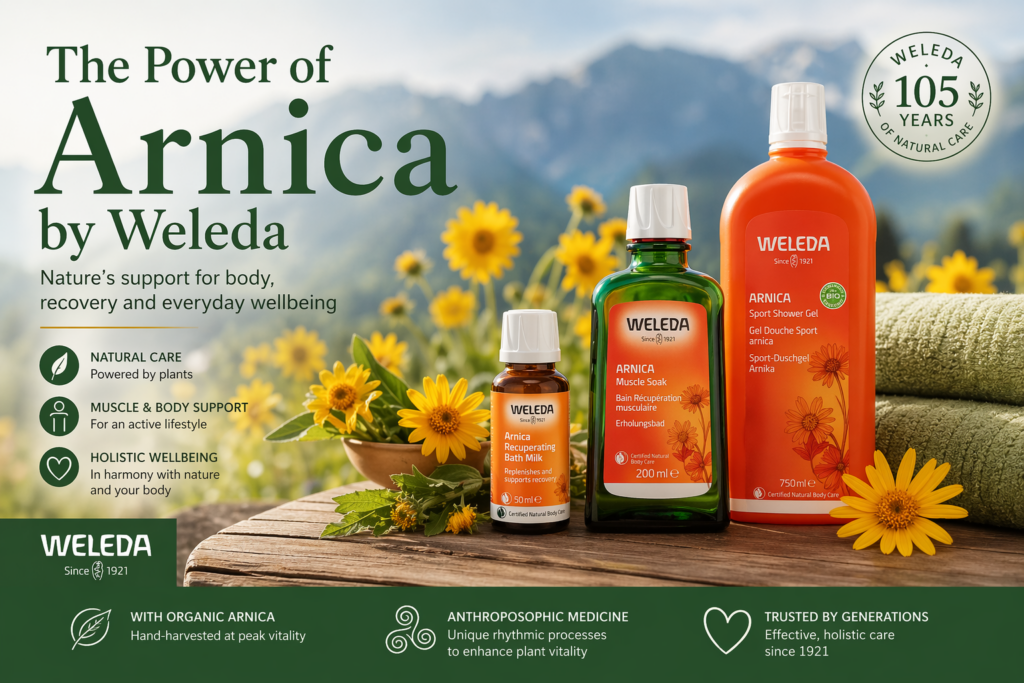
The Power of Arnica by Weleda Nature’s support for body, recovery and everyday wellbeing For nearly a century, Weleda has worked in harmony with nature to create effective, holistic care. Among our most treasured botanical allies is Arnica montana – a mountain plant with remarkable traditional use and a proud place in natural health. In this guide, I’ll share the story of arnica – in homeopathy, in anthroposophic medicine, and in Weleda’s skincare and body care. You’ll discover our arnica bath and shower products, how they can support your active lifestyle, and why your support means the world for a small business like mine. What is Arnica? Arnica montana is a hardy yellow-flowered plant native to the mountain regions of Europe. It thrives in alpine meadows at high altitude, where the air is pure and the growing conditions are demanding – much like the plant itself. Arnica has a long tradition of use in folk medicine for bumps, bruises, muscle fatigue and overexertion. Shop Arnica Products Explore the full range of Weleda Arnica products: Arnica Products Browse all Weleda products: Weleda Store Arnica Recuperating Bath Milk 50ml View Product A compact way to enjoy the Weleda Arnica bath ritual. Arnica Muscle Soak 200ml View Product A restorative soak for tired, overworked muscles and weary limbs. Arnica Sport Shower Gel 750ml View Product Fresh, energising body care for active daily routines. Arnica in Homeopathy In homeopathy, Arnica montana is one of the most commonly used remedies, often associated with bruising, soreness and post-exertion recovery within that tradition. It is distinct from cosmetic and body-care products, which use botanical extracts for external use. Arnica Used by Weleda At Weleda, arnica features in carefully designed body-care formulas that support active lifestyles and recovery rituals. It brings together botanical tradition, sensory care and a practical everyday use. Arnica in Anthroposophic Medicine Weleda’s roots are closely connected with anthroposophic medicine, a holistic approach that sees body, mind and spirit as interconnected. Arnica is valued in that tradition for its relationship with vitality, movement and recovery after physical strain. BROOLED Independent Weleda Store Natural wellness, thoughtful service, and products chosen with care. Supporting a Small Business – Supporting Real People My faithful customers in Europe and the USA cannot shop via my Weleda Advocate website. But you can buy your favourite Weleda products in my own Weleda Store: https://weleda.brooled.co.uk As a small business owner and Weleda Ambassador, your support means a great deal. Thank you for being here. Weleda’s Anniversary in 2026 In 2026, Weleda marks 105 years since its 1921 beginnings. 100 Years of Skin Food Skin Food reaches its 100-year milestone in 2026, celebrating its original 1926 launch. Tags: Weleda Arnica, Arnica Products, Weleda body care, Arnica Muscle Soak, Arnica Recuperating Bath Milk, Arnica Sport Shower Gel, homeopathy, anthroposophic medicine, Weleda anniversary 2026, Skin Food 100 years
Biodynamic Gardening, Demeter, Anthroposophy & Weleda: How a Holistic Vision Became a Global Movement
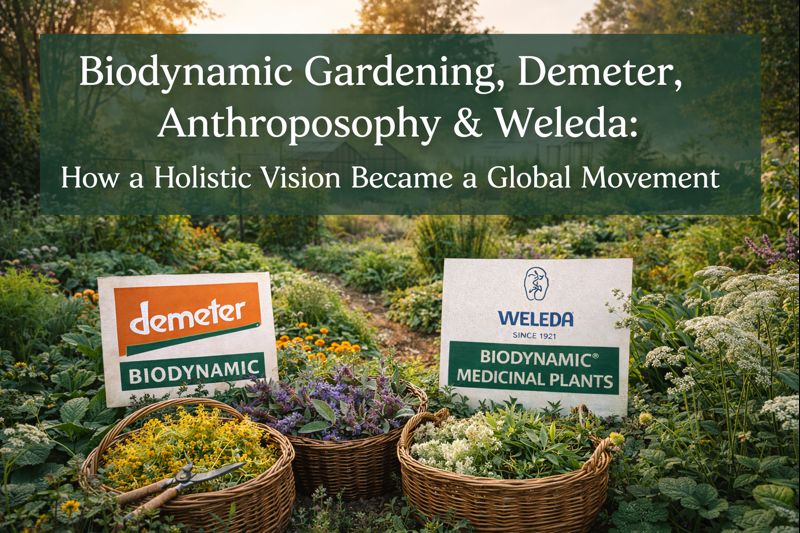
Introduction: A Living System, Not a Product In a world increasingly shaped by industrial agriculture, synthetic inputs, and fragmented approaches to health, a quieter but deeply influential movement has been growing for more than a century. Biodynamic gardening, the Demeter certification, anthroposophy, and the iconic natural health brand Weleda are all expressions of a single, coherent worldview—one that sees soil, plants, animals, humans, and the cosmos as part of an interconnected living system. To many, these names may seem loosely related or even mysterious. Biodynamic gardening is often described as “organic plus,” Demeter is recognized as a rigorous certification label, anthroposophy sounds philosophical or spiritual, and Weleda is known globally for natural skincare and remedies. Yet they are not separate ideas stitched together after the fact. They all originate from the same source and intention: to heal the relationship between humans and nature. This article explores how biodynamic gardening, Demeter, anthroposophy, and Weleda are intrinsically linked—historically, philosophically, and practically—and why their relevance is arguably greater today than ever before. Anthroposophy: The Philosophical Root At the heart of biodynamic gardening, Demeter, and Weleda lies anthroposophy, a holistic philosophy developed by Austrian thinker and social reformer Rudolf Steiner in the early 20th century. Anthroposophy literally means “wisdom of the human being,” and its central aim is to reunite scientific thinking with spiritual insight. Steiner did not reject modern science. Instead, he argued that material science alone was insufficient to understand life. Plants, soils, animals, and humans are not mechanical systems, he suggested, but living beings shaped by invisible forces—rhythms, relationships, and formative energies that can be observed through careful, ethical perception. Anthroposophy expresses itself in many practical fields: In each case, the goal is the same: to support life processes rather than dominate them. In agriculture, this philosophy became biodynamic farming, the first organized ecological agriculture system in the world. Biodynamic Gardening: Agriculture as a Living Organism Origins of Biodynamics Biodynamic gardening began in 1924, when Rudolf Steiner delivered a series of lectures to farmers who were alarmed by declining soil fertility, weaker crops, and loss of seed vitality following the introduction of chemical fertilizers. These lectures—now known as the Agriculture Course—laid the foundation for biodynamic agriculture. Steiner proposed a radical idea for the time: a farm or garden should be understood as a self-contained living organism. Soil, plants, animals, insects, microorganisms, and humans all form a single metabolic system. When balance is restored within this system, fertility and resilience naturally follow. Core Principles of Biodynamic Gardening Biodynamic gardening goes beyond organic practices by integrating ecological, energetic, and cosmic considerations. Its key principles include: Rather than forcing growth, biodynamic gardeners aim to enhance the formative forces of life already present in nature. The Biodynamic Preparations: Nature as Medicine for the Soil One of the most distinctive aspects of biodynamic gardening is the use of nine biodynamic preparations, numbered 500–508. These preparations use medicinal plants such as yarrow, chamomile, nettle, oak bark, dandelion, and valerian, combined with animal substances and carefully timed processes. While often misunderstood or dismissed as mystical, these preparations are used in extremely small quantities—more like homeopathic stimulants for soil life than fertilizers. Their purpose is not to add nutrients, but to activate microbial processes, enhance root–soil relationships, and improve compost maturity. Modern research has increasingly shown that biodynamic soils tend to have: This aligns closely with Weleda’s own approach to medicinal plant cultivation. Demeter: The Gold Standard of Biodynamic Certification As biodynamic farming spread internationally, the need arose to protect its integrity. This led to the creation of Demeter, the world’s oldest ecological certification label, founded in 1928. Named after the Greek goddess of agriculture and fertility, Demeter represents far more than an organic standard. What Makes Demeter Different? Demeter certification requires: Unlike many certifications that focus on inputs, Demeter evaluates the farm as a living whole. Products carrying the Demeter label—whether food, wine, textiles, or cosmetics—must meet rigorous standards from soil to shelf. For conscious consumers, Demeter is a sign of deep ecological commitment rather than surface-level sustainability. Weleda: Anthroposophy in Action Founded in 1921, Weleda is one of the most direct and enduring expressions of anthroposophy in practice. The company was co-founded by Rudolf Steiner, physician Ita Wegman, and chemist Oskar Schmiedel with a clear mission: to create medicines and body care products that support the body’s own healing intelligence. From the beginning, Weleda rejected synthetic chemicals in favor of whole-plant extracts, mineral substances, and rhythmic production processes. This approach mirrored biodynamic principles long before “natural” became a marketing term. Biodynamic Cultivation at Weleda Weleda grows many of its medicinal plants in its own biodynamic gardens around the world, including in Germany, Switzerland, France, and beyond. These gardens are managed according to Demeter standards and biodynamic principles. Key aspects include: This ensures that plant extracts used in Weleda products carry not just chemical constituents, but vitality and integrity. From Garden to Body: A Shared Philosophy What unites biodynamic gardening, Demeter, anthroposophy, and Weleda is a consistent worldview: Biodynamic gardens cultivate plants with stronger root systems, richer aromas, and greater resilience. Demeter ensures these principles are protected at scale. Anthroposophy provides the philosophical foundation. Weleda brings the results into daily human care—through skincare, remedies, and wellness products. In this sense, applying a Weleda product is not just personal care; it is participation in a regenerative system that begins beneath our feet. Why This Matters Today As climate change, soil degradation, and chronic health issues accelerate, the biodynamic–anthroposophical approach offers a compelling alternative. It asks us to slow down, observe, and work with life rather than against it. For gardeners, it offers a way to restore soil and grow nutrient-dense food. For farmers, it provides resilience and independence. For consumers, Demeter and Weleda offer transparency and trust in an often confusing marketplace. Most importantly, this integrated system reminds us that sustainability is not just technical—it is cultural, ethical, and spiritual. Conclusion: One Living Thread Biodynamic gardening, Demeter certification, anthroposophy, and Weleda are not four separate ideas. They are four expressions of one living thread—a holistic vision that recognizes the Earth as a living being and