

Dr. Ita Wegman: Pioneer of Anthroposophic Medicine and Holistic Healing
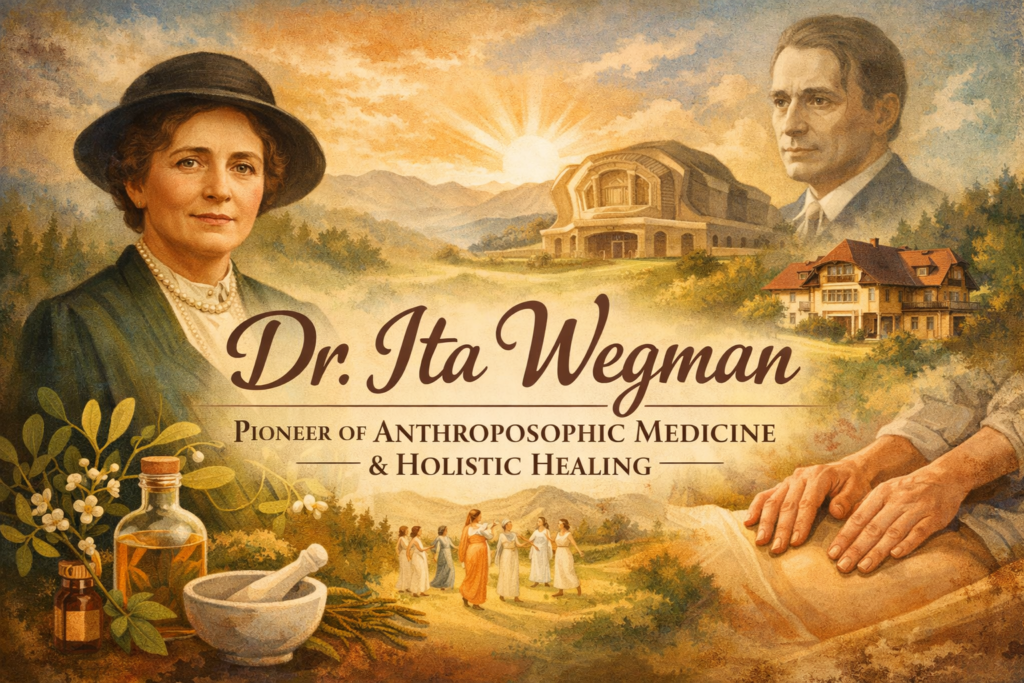
Dr. Ita Wegman (1876–1943) stands as one of the most visionary women in the history of medicine — a courageous physician whose work reshaped medical practice through a holistic understanding of human health and healing. Introduction In a world dominated by conventional scientific medicine, Dr. Ita Wegman introduced a bold alternative — one that integrated physical, emotional, and spiritual dimensions into healing. Her work laid the foundation for anthroposophic medicine, a distinct approach that still resonates globally nearly a century later. But who was Ita Wegman? How did she transition from a Dutch colonial upbringing in Southeast Asia to becoming a trailblazer in holistic health? This article explores her life, influences, challenges, and lasting legacy. Early Life: From Java to Europe Maria Ita Wegman was born on 22 February 1876 in Karawang, West Java — then part of the Dutch East Indies — as the eldest child in a Dutch colonial family. Her early years in Indonesia were shaped by travel and education, including private lessons and boarding school in the Netherlands before adulthood. As a young woman, Wegman experienced a profound personal loss when her fiancé died of lung disease. This tragedy marked a turning point, deepening her interest in spiritual questions and ultimately influencing her future direction toward healing and wellness. At the turn of the 20th century, she relocated to Europe and trained in therapeutic gymnastics and massage, first in Holland and then in Berlin — at a time when women were beginning to enter medical and therapeutic professions but still faced serious barriers. Meeting Rudolf Steiner: Conception of a New Path In 1902, a chance encounter changed the course of her life: Wegman met Rudolf Steiner, the philosopher and founder of anthroposophy — a spiritual and scientific worldview that emphasized the interconnectedness of body, mind, and spirit. Steiner encouraged Wegman to pursue formal medical training, a suggestion she would take seriously. Motivated by Steiner’s ideas, Wegman entered the University of Zurich in 1906, where women were permitted to study medicine — something still rare elsewhere. She excelled and graduated in 1911 with a medical diploma, specializing in women’s health and gynecology. During this period, she also established her first medical practice, developing an integrative approach that blurred distinctions between physical and psychosocial care — a foundation for her future work in anthroposophic medicine. Developing Anthroposophic Medicine The First Clinic By 1917, Wegman had opened her own practice in Zurich, where she began experimenting with therapies inspired by Steiner’s suggestions. Most notably, she developed a treatment for cancer using a mistletoe extract, initially called Iscar — which evolved into Iscador, one of the earliest anthroposophic medicinal preparations. While modern scientific evidence does not conclusively support mistletoe as a curative cancer therapy, Wegman’s work was revolutionary for its time, emphasizing improved quality of life and holistic patient care. Even today, mistletoe preparations are among the most widely recognized complementary cancer therapies in parts of Europe. In 1920, Wegman purchased land in Arlesheim, Switzerland, and the next year established the Klinisch-Therapeutisches Institut — the first clinic dedicated to anthroposophic medicine. This clinic brought together physicians and therapists committed to a comprehensive model of healing. Innovations in Therapeutic Practice Holistic Therapies and Methods Beyond medicine, Wegman introduced a range of therapeutic innovations. She developed rhythmical massage, which became a cornerstone of anthroposophic physical therapy, emphasizing rhythmic, gentle movement to promote systemic balance. Her interdisciplinary vision also embraced artistic and expressive therapies — including eurythmy, painting, music, and speech therapy — all seen as integral to fostering health in body and soul. These methods laid the groundwork for what later became recognized as anthroposophic therapeutic arts. Importantly, she saw the patient as more than a disease; she viewed illness as part of a person’s developmental journey — a concept that redefined therapeutic goals away from symptom suppression toward deeper support of human vitality. Weleda and Expansion of Therapeutic Medicine One of Wegman’s lasting institutional legacies was her role in founding Weleda in 1921, alongside chemist Oskar Schmiedel and others. Originally conceived to produce medications and remedies for the Arlesheim clinic, Weleda grew into a major manufacturer of health and wellness products, still guided by holistic principles. Under her leadership, the clinical therapeutic institute and Weleda pioneered the production of botanical medicines and preparations rooted in anthroposophic philosophy. Wegman’s talents for leadership, vision, and practical implementation were crucial in ensuring these early ventures secured financial stability and long-term success. Teaching and Leadership Medical Journal and Writings Wegman was not only a practitioner but also a communicator. In the mid-1920s, she founded Natura, a medical journal that became an important forum for anthroposophic medical thought and research. Together with Steiner, she authored key texts such as Extending Practical Medicine — originally published as Fundamentals of Therapy — offering theoretical foundations for anthroposophic medical practices. These works helped shape a coherent framework that practitioners around the world could reference and build upon. Role at the Goetheanum In 1923, Steiner appointed Wegman to the Executive Council of the newly reorganized General Anthroposophical Society and director of its medical section at the Goetheanum, the movement’s central research institution. In this role, she helped integrate spiritual science with medical theory and practice. Wegman also provided dedicated personal care to Steiner in his final illness before his death in 1925, forging one of the most important partnerships in the history of anthroposophy. Humanitarian Vision and Social Engagement Wegman’s concern extended beyond institutions to people in need. In 1922, she founded Haus Sonnenhof, a therapeutic home for children with developmental disabilities, applying anthroposophic principles to education and care. Her work was animated by a deep compassion for “fringe groups” often marginalized by society. Particularly in the 1930s, she helped many individuals facing persecution — including Jewish people escaping Nazi Germany — evidencing her commitment to human dignity and social justice. Conflict and Final Years Despite her successes, Wegman’s relationship with the Anthroposophical Society became strained. In 1935, disagreements with other members of the Executive Council led to her